Slab Leak Repair Cost: Detection, Options & Real Prices
I'm Dan Reeves, a licensed master plumber with 20 years in residential work and more than 4,000 jobs behind me. A slab leak is the call nobody wants to make, because the pipe is buried under concrete and every horror story you have heard involves jackhammers and five-figure bills. Here is the truth from the field: some slab leaks are five-figure problems, most are not, and the difference is almost always how early you caught it and which repair method fits your house. In this guide I will give you the real cost of detection, the honest price of every repair option, and the insurance split that catches homeowners off guard.
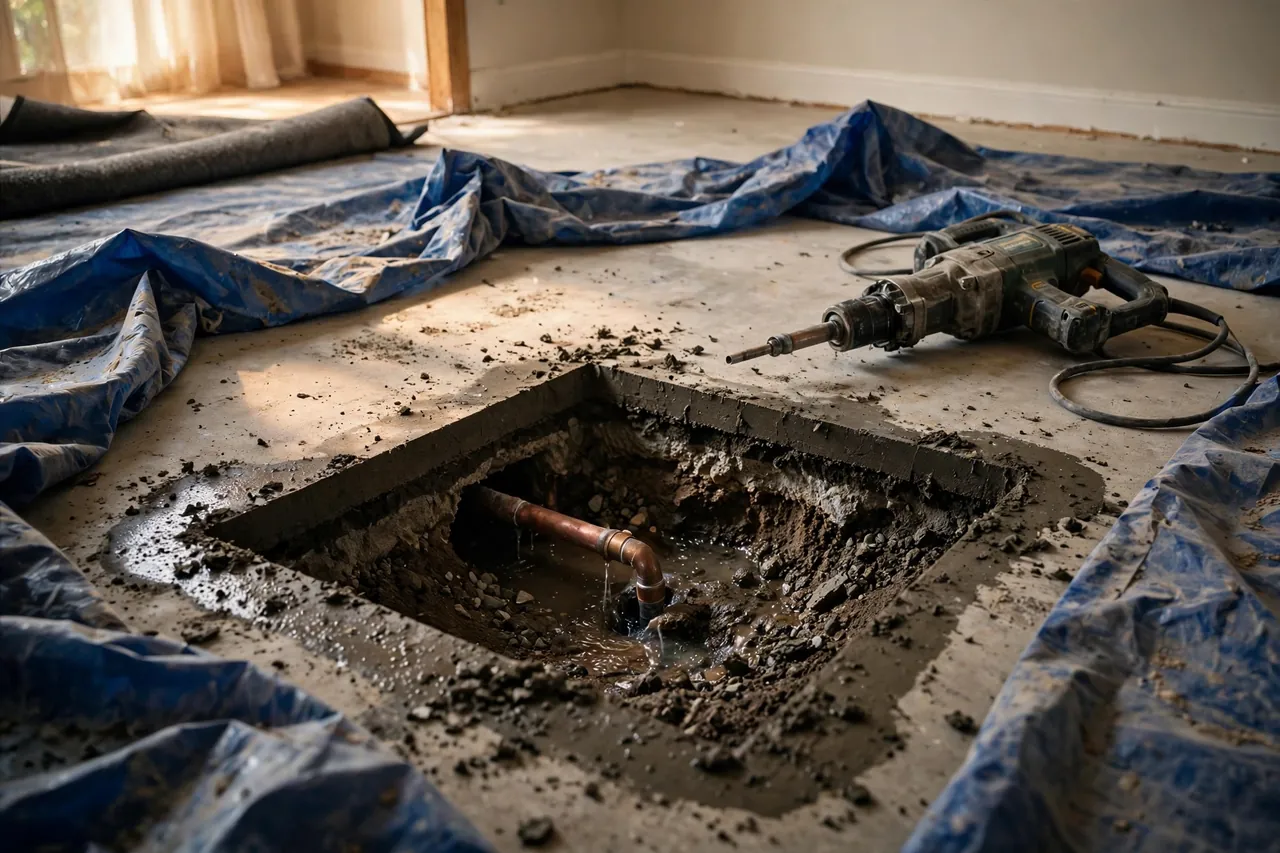
I’m Dan Reeves, a licensed master plumber with 20 years in residential work and more than 4,000 jobs behind me. A slab leak is the call nobody wants to make, because the pipe is buried under concrete and every horror story you have heard involves jackhammers and five-figure bills. Here is the truth from the field: some slab leaks are five-figure problems, most are not, and the difference is almost always how early you caught it and which repair method fits your house. In this guide I will give you the real cost of detection, the honest price of every repair option, and the insurance split that catches homeowners off guard.
Quick answer: Professional detection runs $150 to $600. A spot repair through the slab typically brings the total to $630 to $4,400, with an average around $2,280 including detection. Rerouting the line instead usually costs $600 to $4,000, and trenchless epoxy lining runs $80 to $250 per foot. Insurance often pays for access and water damage on a sudden leak, but rarely for fixing the pipe itself.
What does each slab leak repair option actually cost?
These are the five ways a slab leak gets fixed, with the ranges I see in real quotes. Angi’s national data puts most finished slab leak jobs between $630 and $4,400, and Modernize puts detection-plus-repair between $2,000 and $7,500 for more involved work — both match what I see in the field.
| Method | Typical cost | When it is the right call | Floor damage |
|---|---|---|---|
| Spot repair (open the slab, fix the pipe) | $630–$4,400 total | One leak, newer pipe, accessible spot | Yes — one hole, then patch and flooring repair |
| Reroute (abandon line, run new pipe overhead) | $600–$4,000 per line | Older pipe, repeat failures, brutal access | None — drywall patches only |
| Epoxy lining / pipe coating | $80–$250 per foot | Pinholing pipe that is still structurally sound | None |
| Tunneling under the slab | Adds $1,000s — total often $7,500–$15,000+ | Extensive damage, no interior access possible | None inside; excavation outside |
| Full repipe of under-slab lines | $7,500–$15,000+ | Multiple failing lines, end-of-life plumbing | Varies — usually done as reroutes |
Two line items hide inside every quote and deserve daylight. First, detection is billed separately almost everywhere: $150 to $600 to find and mark the leak before anyone commits to a method. Second, build-back — patching the concrete, replacing the flooring section, matching tile or hardwood — is real money and sometimes sits in a different contractor’s quote. Ask for both numbers in writing before work starts.
How is a slab leak detected without guessing?
You cannot see a pipe under four inches of concrete, so detection is a process of narrowing down. It starts with the meter test: everything off, watch whether the meter still moves. My guide on how to find a water leak in your house walks through that test in detail — it is how you confirm a leak exists before paying anyone.
A detection specialist then pinpoints it with some combination of acoustic listening equipment (the leak makes noise where water escapes under pressure), thermal imaging (a hot-water leak shows as a warm bloom through the slab), and line tracing and pressure isolation to prove which pipe is guilty. Expect $150 to $600 for this visit. I wrote up what drives those fees in my breakdown of leak detection costs — the short version is that you are paying for equipment and the experience to interpret it, and it is the cheapest money in the whole job. A crew that skips detection and opens the slab where the floor feels damp is guessing, because water travels along gravel and rebar and surfaces feet from the actual break.
What are the signs you have a slab leak?
Slab leaks announce themselves quietly, and the early signs are easy to blame on something else:
- A water bill that climbs for no reason. A pinhole under a slab can waste hundreds of gallons a day. If your usage is flat and your bill jumped, water is going somewhere — I cover the full workup in high water bill with no visible leak.
- The sound of running water with everything off. Stand in a quiet house at night. Hissing or faint running water that never stops is a leak until proven otherwise.
- A warm or damp spot on the floor. Hot lines leak more often, and the heat telegraphs through tile. Damp carpet tack strips and musty odor with no spill history point the same way.
- Falling water pressure or a water heater that runs constantly. A hot-line leak keeps the heater firing around the clock.
- Cracks in tile, grout, or walls, and doors starting to stick. This is the late sign — water eroding soil under the slab lets the foundation move. If you are seeing this, stop scheduling and start calling.
One sign is a hint. Two signs on a slab-built home is a detection appointment this week.
Which is better: spot repair, reroute, or lining?
This is the decision the whole job turns on, so let me give you my actual rules.
Spot repair wins when the pipe is young and this is its first failure. A 10-year-old copper line with one pinhole probably has decades left elsewhere. You pay for one hole in the slab, one fitting, a concrete patch, and flooring repair. All-in, that is the $630 to $4,400 range, and the wide spread is access: a leak under a garage slab is a morning’s work, while a leak under a kitchen island with hardwood floors is not.
Rerouting wins when the pipe is old, has leaked before, or the leak sits somewhere miserable. Instead of opening the floor, we cap the leaking line at both ends and run a new PEX line through the attic, walls, or ceiling. At $600 to $4,000 per line it often costs the same as a spot repair — and the rerouted line can never leak under your slab again. On a 40-year-old slab home with its second leak, rerouting is not the premium option. It is the honest one.
Epoxy lining wins in a narrow window: the pipe pinholes but is not collapsed, offset, or rotten, and opening the floor is genuinely prohibitive. At $80 to $250 per foot it is priced like the trenchless work it is, and it requires the pipe to be cleaned and verified by camera first.
Tunneling and full repipes are for the bad cases — multiple failing lines or a foundation already moving. That is where the $7,500 to $15,000-plus totals live, and at that point the conversation becomes about solving the whole under-slab system once rather than paying for a fourth emergency.
How long does a slab leak repair take?
Homeowners always ask, because the answer decides whether you are booking a hotel or just a day of noise. A spot repair is typically one working day of plumbing: detection in the morning, slab opened and pipe fixed by afternoon, concrete patched before the crew leaves — flooring restoration after that is a separate trade and a separate schedule. A single-line reroute usually takes one to two days, most of it running and securing the new pipe through walls or attic, with drywall patching afterward. Epoxy lining is one to two days including the cleaning and camera verification the pipe needs first. Tunneling is the slow option, often the better part of a week, because crews are hand-digging under your foundation in shifts. And a full under-slab repipe is a multi-day project you plan around, not a surprise you absorb. None of these timelines includes waiting on an insurance adjuster, which is one more reason to make that call before demolition starts, not after.
Does insurance help with any of this?
Often, but not the part you expect. The standard split on a typical homeowners policy: if the leak was sudden and accidental, the insurer commonly pays for the tear-out and replacement of slab and flooring needed to reach the pipe, plus the resulting water damage to your home and belongings. The repair of the pipe itself — the plumber’s actual fix — is usually on you, because the pipe is considered your maintenance responsibility. A leak that clearly ran for months gets denied more often than not.
That split changes your paperwork strategy. Get the detection report in writing, photograph everything before demolition, and notify your insurer before the slab is opened, not after. I go through the covered-versus-denied scenarios in detail in does home insurance cover plumbing.
When should you call a pro about a slab leak?
Immediately — this is not a DIY diagnosis beyond the meter test. Call when your bill jumps without explanation, when you hear water with everything off, or when a warm or damp patch appears on a slab floor. Every week a slab leak runs, it erodes the soil your foundation sits on and widens the gap between a $2,000 repair and a $12,000 one. The detection visit is a few hundred dollars. In twenty years I have never had a homeowner regret finding a slab leak early, and I have met plenty who regretted the opposite.
Frequently asked questions
How much does slab leak detection cost by itself?
Professional slab leak detection typically runs $150 to $600, billed separately from the repair. I know that stings, but locating a leak under concrete without equipment is guesswork, and guessing with a jackhammer is how a $2,000 job becomes a $6,000 job. A good detection tech uses acoustic listening gear, thermal imaging, and pressure testing to mark the leak within a foot or so. Some companies credit part of the detection fee toward the repair if you hire them for both. Always ask before you book.
Can a slab leak be fixed without tearing up my floor?
Often, yes. The two no-demolition options are rerouting, where we abandon the leaking line and run a new one through walls and ceilings, and epoxy pipe coating, where the inside of the existing pipe is cleaned and lined in place. Rerouting a single line typically runs $600 to $4,000 and is my default when the pipe is old. Coating works when the pipe is structurally sound but pinholing. What you cannot do is ignore it: water under a slab erodes soil, and the repair gets bigger every month it runs.
Does homeowners insurance pay for slab leak repair?
Partially, and the split surprises people. On a typical policy, if the leak was sudden and accidental, insurance often pays to tear out and replace the slab and flooring to access the pipe, plus the resulting water damage — but not the cost of fixing the pipe itself. A slow leak that ran for months usually gets denied as a maintenance problem. Document everything, save the detection report, and file before you authorize demolition. I explain the full picture in my guide on whether home insurance covers plumbing.
What are the first signs of a slab leak?
The signs I take seriously are a water bill that jumps with no change in usage, the sound of running water when everything is off, a warm spot on the floor over a hot line, damp flooring or a musty smell with no visible source, and cracks appearing in tile or walls. One sign alone can mislead. Two together on a slab home means call for detection that week, not that season. Catching it early is the difference between a spot repair and a reroute.
Is it better to repair the pipe or reroute it?
It depends on the pipe's age and condition, and I make this call with the homeowner at the kitchen table. Spot repair makes sense on a newer copper line with one failure — the rest of the pipe is probably sound. Rerouting makes sense when the pipe is old, has failed before, or sits somewhere brutal to access, because a rerouted line never leaks under your slab again. Paying to open a slab twice in three years is the expensive outcome. Rerouting costs more once and ends the problem permanently.